
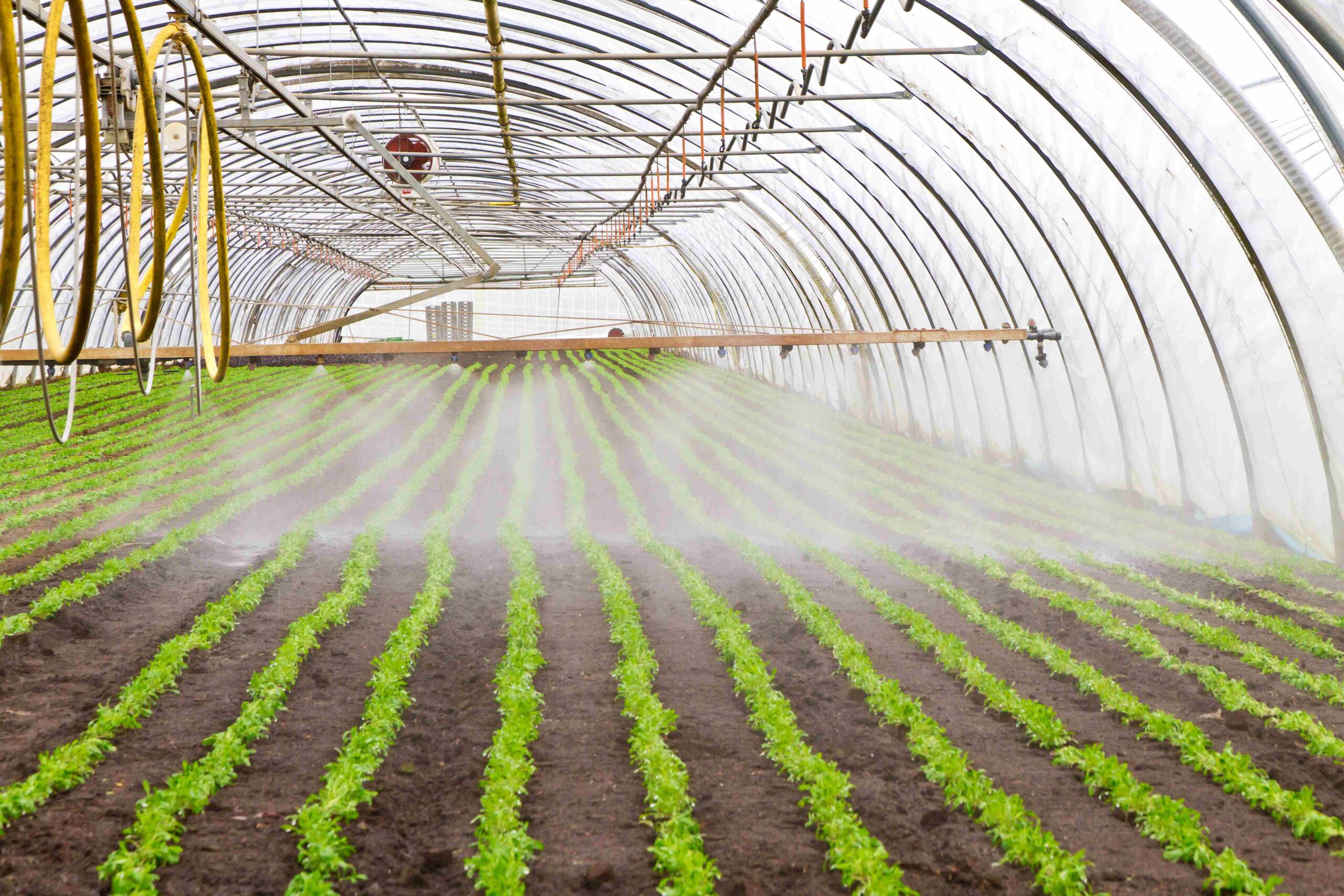
Did you know that microbial control plays an important role in the water used to irrigate crops?
Water from rivers, wells, ponds and reclaimed sources used for irrigation naturally contains microorganisms, including bacteria, algae and fungi. Managing microbial growth helps keep irrigation systems operating efficiently and supports the safe and effective use of water for crop production.
Why irrigation water needs microbial control
Microbial control in irrigation serves two important purposes: helping irrigation systems function effectively and reducing microbiological risks associated with water used on crops.
Keeping irrigation systems flowing
Inside pipes, tanks and drip lines, microorganisms can attach to surfaces and form biofilms. Together with algae and mineral deposits, these biofilms can narrow pipes and block the small emitters used in drip irrigation. As a result, water and nutrients may be distributed unevenly, reducing irrigation efficiency and increasing maintenance requirements.
Supporting crop hygiene and food safety
Where irrigation water comes into contact with edible crops, poor water quality can increase the risk of microbial contamination. This is particularly relevant for fruit and vegetables that are often consumed raw, such as leafy greens, herbs and berries. Microorganisms present in irrigation water can be transferred to crops and, in some circumstances, may contribute to foodborne illness. Effective water management and microbial control help reduce these risks by supporting the microbiological quality of irrigation water and limiting microbial growth within irrigation systems.
Where it matters most
Fresh produce eaten raw
Leafy greens, herbs, berries and other fresh produce are often consumed with little or no cooking. Where irrigation water comes into contact with edible crops, microorganisms present in the water can be transferred to the crop surface. For this reason, the microbiological quality of irrigation water is an important consideration in food production, helping reduce contamination risks and supporting food safety.
Greenhouses and hydroponics
In greenhouses and hydroponic systems, water is frequently recirculated to improve resource efficiency and reduce water consumption. While these systems offer sustainability benefits, recirculating water can also allow microorganisms to spread throughout the system if not properly managed. Effective microbial control helps maintain water quality and supports healthy crop production while enabling the efficient reuse of water.
Water reuse
As pressure on water resources grows, treated wastewater is increasingly being used for agricultural irrigation, particularly in water-scarce regions. Water reuse can help improve water security and reduce pressure on freshwater resources, but it requires appropriate management of microbiological risks. In the European Union, Regulation (EU) 2020/741 establishes minimum water quality requirements for reclaimed water used in agricultural irrigation. Effective microbial control supports the safe and reliable use of these alternative water sources.
Water storage and distribution systems
Water is often stored in reservoirs, tanks and distribution networks before reaching crops. During storage and transport, microorganisms can grow and biofilms can develop on surfaces, affecting water quality and system performance. Managing microbial growth helps maintain the reliability of irrigation infrastructure and supports the consistent delivery of water to crops
What microbial control delivers
Good microbial control in irrigation water leads to:
- more reliable and even irrigation
- support for the production of safe, high-quality fresh produce
- longer-lasting irrigation equipment
- more scope to use alternative water sources, such as reclaimed water
As agriculture faces increasing pressure to produce more food while using water more efficiently, maintaining the quality of irrigation water is becoming increasingly important. Microbial control helps support reliable irrigation systems, responsible water use and the production of safe, high-quality crops.
