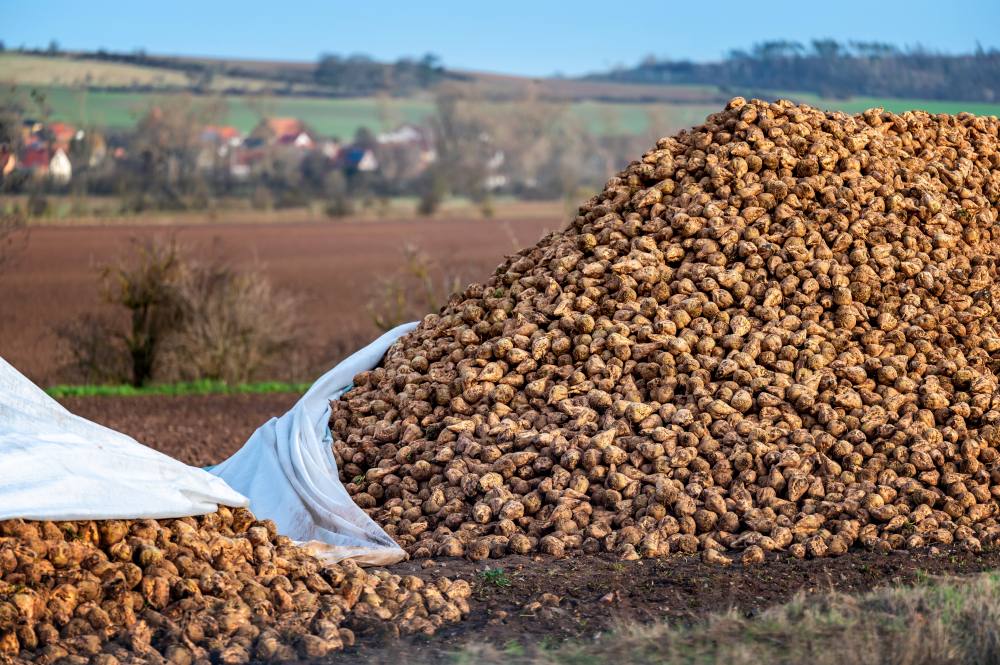
Every autumn, sugar factories across Europe process the sugar beet harvest into sugar. In other parts of the world, sugarcane goes through a similar process.
During processing, sugar is extracted from the beet or cane into a sugar-rich juice. These conditions can also allow microorganisms to grow. Managing that microbial growth is therefore part of the sugar production process.
Why microorganisms matter in sugar production
Microorganisms are naturally present in the environment and can enter the process with the harvested crop or from the processing environment.
Sugar-rich conditions can support their growth. Some microorganisms can consume sucrose, while others produce substances such as dextran or form biofilms on surfaces.
How microbial growth can be managed
Microbial control in sugar production can involve a combination of measures rather than relying on a single approach.
These can include:
- Good raw material management: handling and processing harvested beet or cane appropriately.
- Cleaning and hygiene: keeping processing equipment and surfaces clean and managing the build-up of biofilm.
- Process management: controlling production conditions that can influence microbial growth.
- Monitoring: keeping track of process conditions and microbial activity.
- Targeted microbial control: where appropriate, suitable microbial-control treatments can form part of the overall approach.
Part of a well-managed production process
Microbial control is one part of managing sugar production. By combining good raw material handling, hygiene, process management, monitoring and, where appropriate, targeted treatment, producers can manage unwanted microbial growth during processing.
Sugar production is therefore a useful example of how microbial control can be integrated into an industrial process, alongside other good production practices.